Belarus

Andrei Pochobut released in five-for-five prisoner swap between Belarus and Poland

News Desk 1 min read
Add to preferred sources

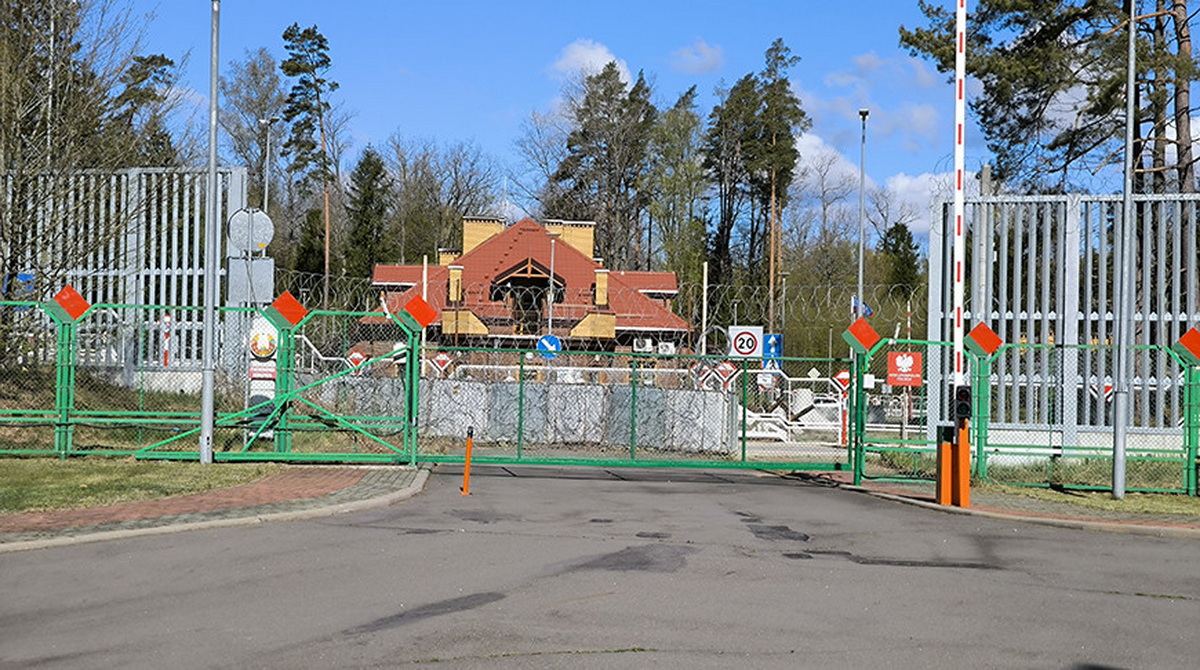
A prisoner exchange operation between Belarus and Poland was held on April 28 at the state border in the Kamenets District. The swap was conducted under a "five-for-five" formula, the Belarusian state news agency BelTA reports.

The border between Poland and Belarus
Source: Belarusian state news agency BelTA

Among those released is journalist Andrei Pochobut. Taking into account a personal appeal addressed to the President of Belarus by Pochobut's mother and Anzhelika Borys, the head of state instructed the State Security Committee (KGB) to include the convicted man in the exchange process.

As a result of the operation, ten citizens of different countries were released and given the opportunity to reunite with their families. Among them are also citizens of Belarus who performed especially important tasks in the interests of the country's national security and defense capability.

According to the agency, the exchange marked the culmination of a complex and lengthy negotiation process between the KGB of Belarus and Poland's Foreign Intelligence Agency. The talks began in September 2025 and were conducted on the direct instructions of Alexander Lukashenko. Special services of seven states ultimately took part in the process.

Source: Belarusian state news agency BelTA.

Share this article

Rate this article

Belarus

EAEU officials discuss simpler customs declarations for online trade

News Desk August 20, 2026 12:20 PM 2 min read

Officials, postal operators and express carriers from the Eurasian Economic Union have discussed proposed changes to customs declarations for express shipments and cross-border online sales.

EAEU
Credit: tengrinews.kz

The talks took place in a working group under the Eurasian Economic Commission's Advisory Committee on Customs Regulation. Kuat Rakhimov, director of the commission's Department for Customs Legislation and Law Enforcement Practice, chaired the meeting.

One proposal from Kazakhstan would add coded information about relevant prohibitions and restrictions to declarations for express cargo and e-commerce goods. Standardized codes could allow customs systems to check some information automatically. The change may eventually shorten processing times, but the commission did not announce that it had been adopted or give a date for implementation.

Participants also considered a simplified declaration for goods sold by businesses in EAEU countries to individual buyers abroad through marketplaces and other online platforms. The proposal is intended to make customs procedures easier for exporters engaged in e-commerce.

The commission said it would prepare amendments to the rules for completing the e-commerce declaration. This means the measures remain under development.

The EEC has worked on special customs forms for express cargo and online trade for several years. Its Board approved an express-cargo declaration form and completion rules in 2018. It approved the structure and format of a separate declaration for e-commerce goods in December 2024.

Source: pravo.by

Share this article

Rate this article

Belarus

Lukashenko Opens Polesia Festival, Calls Region Ancestral Home of Slavs

News Desk August 18, 2026 02:19 PM 3 min read

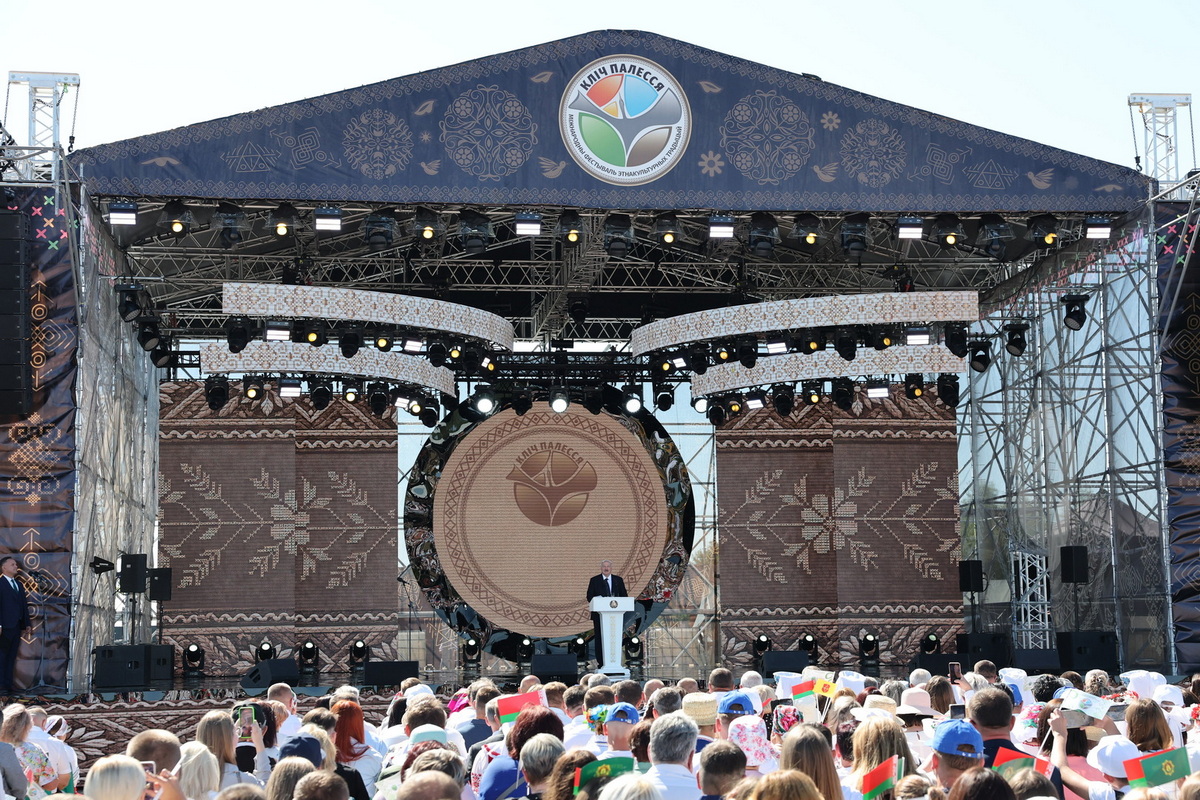
Belarusian President Alexander Lukashenko attended the opening of the Zov Polesia festival, hailing the Polesia region as the ancestral home of the Slavs and the source of Belarusian identity. He also highlighted efforts to develop the region and preserve its heritage.

Polesia Festival
Photo: president.gov.by

Belarusian President Alexander Lukashenko took part on 15 August in the opening ceremony of the international festival of ethnocultural traditions "Zov Polesia" ("Call of Polesia"), an event dedicated to the cultural traditions of the Polesia region, a historical area in southern Belarus.

Greeting participants, Lukashenko called the festival a bright and unique event. "According to historians, Polesia is the ancestral home of the Slavs," he said. "From here come our roots." He recalled that the festival was launched in 2010 as a reason for the three "brotherly peoples" — Belarusians, Russians and Ukrainians — to come together, and said all Slavs were welcome.

Origins and Identity

The president said the roots of the Belarusian people reach back to Turov, a town in the region, and that no politics could reverse that history. He said he had come to believe that the main features of the Belarusian character were formed in Polesia. "Poleshuks are cunning, smart, very hardworking and talented people," he said, using the traditional name for residents of the area.

Lukashenko said Belarusians are a nation that absorbed habits and traditions from Israel, the East, Europe and Kyivan Rus', and ordered that this be reflected in the National Museum now under construction in the centre of Minsk. "Culture Minister Markov is finishing the construction of the National Museum, and we must firmly underline this and define it forever," he said.

Festival and Peace

He praised the people of the region, saying that every visit to Pripyat Polesia fills him with admiration. He said the festival had become a calling card of the region and a holiday for friends and like-minded people.

"We are open and always glad to see guests, we remember our roots and are faithful to traditions," Lukashenko said, adding that the region's most important issue was peace and security. "War is very close. It is at your doorstep," he said.

Development and Recollections

The president recalled his first steps in office in Polesia, including mowing the Pripyat floodplain together with locals, after which they called him "one of us." He also described an early meeting in Lyaskovichi, an agro-town in the region, when an elderly woman asked him for help with bread. He said he ordered military bakeries to be moved there, and the first hot bread was produced.

Lukashenko said a previous revival program had been implemented and that a new development program for Polesia is now being funded with significant budget resources. He said the emphasis would be on roads and bridges and on concentrating development in agro-towns such as Lyaskovichi, where living conditions should be as good as in cities. "From you only one thing is needed — discipline, order and labour," he told residents.

The program is overseen by Mikhail Rusy, a native of Polesia, the president noted. He said the region has become a center of developed industry, vegetable growing and a cultural center with tourist potential.

Source: pravo.by

Share this article

Rate this article

World News

Faint radio galaxies may fade faster after their jets switch off

News Desk August 20, 2026 01:06 PM 2 min read

Radio observations of 14 distant galaxy candidates suggest that some radio galaxies enter a relatively short and varied fading phase after their central jets stop supplying energy to large lobes of plasma.

starry sky
Credit: pexels.com

Radio galaxies are powered by active galactic nuclei, bright central regions associated with matter falling toward supermassive black holes. Some produce jets that feed enormous radio-emitting lobes. When the jets stop, the lobes remain visible for a time as their particles lose energy. Astronomers call these systems remnant radio galaxies.

Researchers led by Sushant Dutta of the University of Cape Town and the Inter-University Institute for Data Intensive Astronomy studied 14 candidate remnants in the XMM-Newton Large-Scale Structure field.

They combined observations from the MeerKAT MIGHTEE and uGMRT superMIGHTEE surveys with data from LOFAR, GMRT and the Karl G. Jansky Very Large Array. Together, the observations covered radio frequencies from 144 MHz to 1.5 GHz.

Models of the sources' radio spectra classified 12 as remnants and reclassified two as active. The result shows why observations at several frequencies are important: candidates selected from limited data can be misidentified.

The models estimated total spectral ages of about 8 million to 42 million years, with a median of roughly 12 million years. These estimates are shorter than those for many remnants examined in earlier studies. The fraction of each source's estimated lifetime spent in the remnant stage ranged from 4% to 83%, suggesting that the sample includes galaxies at very different stages after their jets switched off.

Most of the sources are at relatively high redshifts. The researchers found an association between higher redshift and younger estimated spectral age after accounting for radio luminosity. They said stronger energy losses involving the cosmic microwave background, along with rapid expansion in low-density environments, could help explain the pattern. The observational study does not establish either explanation as the sole cause.

The sample is small, and the ages depend on models of how particles and magnetic fields evolve in the radio lobes. Even so, the findings point to a faint population that previous surveys may have missed. Future surveys with the Square Kilometre Array should find many more such sources and test how common short-lived remnants are.

The study was published in Monthly Notices of the Royal Astronomical Society.

Source: phys.org

Share this article

Rate this article

Science & Tech

Spider-Man's fictional power inhibitor draws on real RNA medicine

News Desk August 20, 2026 12:29 PM 2 min read

The power-suppressing device in Spider-Man: Brand New Day borrows its scientific language from RNA interference, a real medical technique. But current treatments could not quickly and precisely turn a complex set of superhuman traits on and off.

Spider-Man
Credit: open sources

In the film, Peter Parker asks whether the device uses target-specific short interfering RNA, usually shortened to siRNA. These small RNA molecules can be designed to recognize a particular messenger RNA, or mRNA.

Messenger RNA carries instructions copied from DNA to the cell's protein-making machinery. An siRNA guide can direct a cellular complex known as RISC to matching mRNA. The complex then cuts the target, reducing production of the corresponding protein.

This process is often called gene silencing, but the name can be misleading. The treatment does not remove or switch off the underlying DNA. It lowers the output of a selected gene, and the effect can wear off.

RNA interference is established medicine, not science fiction. Several siRNA drugs have been approved by the US Food and Drug Administration for conditions including hereditary amyloidosis, acute hepatic porphyria, primary hyperoxaluria, high cholesterol, hemophilia and familial chylomicronemia syndrome.

The fictional application presents much bigger problems. Spider-Man's abilities would presumably involve many proteins, tissues and biological pathways. A single siRNA target would be unlikely to suppress strength, reflexes, senses and other traits together. Targeting several genes would also increase the challenge of predicting side effects.

Delivery is another major obstacle. Most approved siRNA medicines are designed to reach the liver, although one approved product uses lipid nanoparticles and researchers are testing ways to reach other organs. A whole-body treatment affecting muscles, nerves and other tissues would be far more difficult.

Real siRNA drugs also do not behave like an instant switch. They generally reduce rather than eliminate production of a protein. Their effects vary by drug and can last for weeks or months. Even after the silencing effect declines, cells may need time to rebuild the affected proteins.

The film therefore uses a genuine biological mechanism as a plausible idea, not a technology that medicine can currently reproduce. RNA interference can selectively reduce protein production, but it cannot safely fine-tune fictional superpowers on demand.

Source: sciencenews.org

Share this article

Rate this article

World News

Readers urge broader debate on UK food resilience

News Desk August 20, 2026 12:16 PM 2 min read

Three readers responding to a Guardian column have argued that Britain should strengthen local food networks, debate emergency planning more openly and treat stockpiles as only one part of food security. Their letters express policy views rather than new government decisions.

food
Credit: pexels.com

Dan Farag, director of innovation and practice at the Young Foundation, argues that community organisations and trusted local networks can play an important role during floods, infrastructure failures and other emergencies.

He proposes making more underused public land available for community food growing. He points to groups such as Incredible Edible as examples of residents working together to grow and share food. Such projects may strengthen local skills and connections, although they could not replace the national food supply on their own.

David E Alexander, emeritus professor of emergency planning and management at University College London, calls for elected politicians to lead a public discussion about long-term food planning and emergency reserves.

He cites Roadmap for Resilience: A UK Food Plan for 2050, an 86-page report produced through a research programme funded by UK Research and Innovation. The roadmap proposes changes to farming, diets, business planning, data and food-system governance. It is a research-led set of recommendations, not an adopted government plan.

Antony So, a co-author of the National Preparedness Commission's 2025 report Just in Case: 7 Steps to Narrow the UK Civil Food Resilience Gap, argues that emergency stocks must form part of a wider resilience system.

He points to Switzerland, where the federal government and private companies jointly maintain compulsory stocks. The system covers essential foods and agricultural inputs including fertiliser and animal feed. The Swiss government sets the required goods and quantities, while private businesses own and manage the stocks.

So argues that reserves alone would be insufficient during a prolonged crisis if electricity, fuel, water, transport or communications failed. Food security depends on all these systems continuing to function.

Together, the letters make the case for a broader public debate. Their proposals range from neighbourhood food growing to national contingency planning, but they share the view that resilience involves people, infrastructure and institutions as well as stored food.

Source: theguardian.com

Share this article

Rate this article

World News

Heavy showers may bring local flooding but will not end England's drought

News Desk August 20, 2026 12:07 PM 2 min read

Heavy showers could cause local surface-water flooding in parts of the UK, but forecasters and water experts say short bursts of rain will not reverse drought conditions across much of England.

rain
Credit: pexels.com

The Met Office forecast a shift to cooler, more unsettled weather after a heatwave. Some places could receive intense showers, while others may get little rain. Water running quickly from hard, very dry ground can add to local flood risk when rainfall is particularly heavy.

That does not mean the drought is ending. At the start of August, Environment Agency figures showed that seven areas of England were in drought. Reservoir storage across England had fallen to 69%, which was 11.6 percentage points below the long-term average for that time of year. Five monitored reservoirs were classed as exceptionally low.

The dry conditions were also affecting rivers, wildlife and farming. The agency reported low flows, algal blooms, fish deaths and restrictions on water abstraction. More than 25 million people were covered by temporary limits on water use in early August.

Water supply problems continued in south-east England. South East Water said thousands of customers in parts of Kent lost supplies before most connections were restored. The company asked customers to limit use while storage tanks recovered.

Wessex Water also announced a temporary-use ban covering about 1.4 million customers in parts of south-west England. It was the company's first such restriction since 1976. Thames Water, which had already imposed restrictions, asked customers to keep reducing demand.

Brief downpours can reduce immediate pressure on vegetation and lower wildfire risk, but drought recovery normally requires sustained rainfall. Rivers, reservoirs and groundwater respond over different timescales, so several wet days in one area cannot restore depleted water resources across England.

Flooding and drought can therefore occur at the same time in different places, or even in the same region. A short, intense storm can overwhelm drains and produce rapid runoff while longer-term river flows, groundwater and reservoirs remain unusually low.

Source: theguardian.com

Share this article

Rate this article

World News

Ukraine appoints defence minister as senior officials face corruption probe

News Desk August 20, 2026 12:57 PM 2 min read

Ukraine's parliament approved Maj. Gen. Yevhenii Khmara as defence minister on August 19 as anti-corruption investigators pursued a money-laundering case involving senior officials.

dollars
Credit: pexels.com

he National Anti-Corruption Bureau of Ukraine said investigators had identified a group suspected of laundering 150 million hryvnias, about $3.4 million, to provide bail for a defendant in a major corruption case from 2025.

The agency said the suspects included a former lawmaker, the chair of a state bank's board, the head of its supervisory board and a deputy head of the presidential office. Investigators released few other details.

President Volodymyr Zelenskyy dismissed Iryna Mudra as a deputy head of the presidential office on the same day. Her office was searched, according to lawmaker Oleksii Honcharenko, but investigators had not publicly named Mudra as a suspect in the information reported by the Associated Press. Zelenskyy was not implicated in the case.

The investigation added to political pressure on the government a day after former defence minister Mykhailo Fedorov called for a way to hold national elections during the war.

Fedorov said Ukraine should find a legal, safe and realistic mechanism to restore a full democratic process if the war continues. Ukraine is under martial law, which currently prevents national elections. His statement was therefore a political proposal, not an announcement that a vote had been scheduled.

Zelenskyy dismissed Fedorov in July during a disputed military leadership reshuffle. The decision prompted street protests from supporters of the former minister. Khmara then served as acting defence minister before lawmakers confirmed him in the post on August 19.

Source: apnews.com

Share this article

Rate this article