
World News

Heavy showers may bring local flooding but will not end England's drought

News Desk 2 min read
Add to preferred sources

Heavy showers could cause local surface-water flooding in parts of the UK, but forecasters and water experts say short bursts of rain will not reverse drought conditions across much of England.

rain
Credit: pexels.com

The Met Office forecast a shift to cooler, more unsettled weather after a heatwave. Some places could receive intense showers, while others may get little rain. Water running quickly from hard, very dry ground can add to local flood risk when rainfall is particularly heavy.

That does not mean the drought is ending. At the start of August, Environment Agency figures showed that seven areas of England were in drought. Reservoir storage across England had fallen to 69%, which was 11.6 percentage points below the long-term average for that time of year. Five monitored reservoirs were classed as exceptionally low.

The dry conditions were also affecting rivers, wildlife and farming. The agency reported low flows, algal blooms, fish deaths and restrictions on water abstraction. More than 25 million people were covered by temporary limits on water use in early August.

Water supply problems continued in south-east England. South East Water said thousands of customers in parts of Kent lost supplies before most connections were restored. The company asked customers to limit use while storage tanks recovered.

Wessex Water also announced a temporary-use ban covering about 1.4 million customers in parts of south-west England. It was the company's first such restriction since 1976. Thames Water, which had already imposed restrictions, asked customers to keep reducing demand.

Brief downpours can reduce immediate pressure on vegetation and lower wildfire risk, but drought recovery normally requires sustained rainfall. Rivers, reservoirs and groundwater respond over different timescales, so several wet days in one area cannot restore depleted water resources across England.

Flooding and drought can therefore occur at the same time in different places, or even in the same region. A short, intense storm can overwhelm drains and produce rapid runoff while longer-term river flows, groundwater and reservoirs remain unusually low.

Source: theguardian.com

Share this article

Rate this article

World News

Ukraine appoints defence minister as senior officials face corruption probe

News Desk August 20, 2026 12:57 PM 2 min read

Ukraine's parliament approved Maj. Gen. Yevhenii Khmara as defence minister on August 19 as anti-corruption investigators pursued a money-laundering case involving senior officials.

dollars
Credit: pexels.com

he National Anti-Corruption Bureau of Ukraine said investigators had identified a group suspected of laundering 150 million hryvnias, about $3.4 million, to provide bail for a defendant in a major corruption case from 2025.

The agency said the suspects included a former lawmaker, the chair of a state bank's board, the head of its supervisory board and a deputy head of the presidential office. Investigators released few other details.

President Volodymyr Zelenskyy dismissed Iryna Mudra as a deputy head of the presidential office on the same day. Her office was searched, according to lawmaker Oleksii Honcharenko, but investigators had not publicly named Mudra as a suspect in the information reported by the Associated Press. Zelenskyy was not implicated in the case.

The investigation added to political pressure on the government a day after former defence minister Mykhailo Fedorov called for a way to hold national elections during the war.

Fedorov said Ukraine should find a legal, safe and realistic mechanism to restore a full democratic process if the war continues. Ukraine is under martial law, which currently prevents national elections. His statement was therefore a political proposal, not an announcement that a vote had been scheduled.

Zelenskyy dismissed Fedorov in July during a disputed military leadership reshuffle. The decision prompted street protests from supporters of the former minister. Khmara then served as acting defence minister before lawmakers confirmed him in the post on August 19.

Source: apnews.com

Share this article

Rate this article

World News

Deadly landslide hits South Korea as monsoon floods affect Philippines

News Desk August 20, 2026 11:22 AM 2 min read

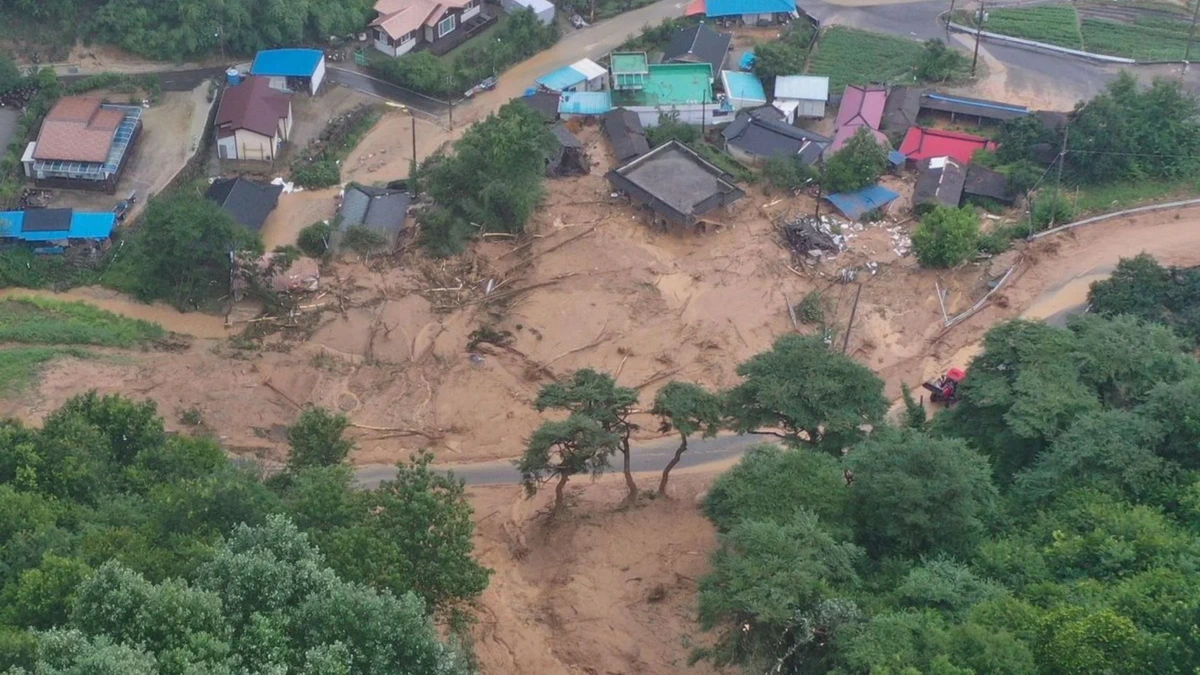
Torrential rain caused a landslide that killed one person in southern South Korea, while separate monsoon flooding and landslides in the Philippines left at least 23 people dead, officials said on August 17.

south korea
Credit: thedailyguardian.com

In South Korea, a landslide struck the ground floor of an apartment building in Geoje, South Gyeongsang province. One resident was taken to hospital in cardiac arrest and later pronounced dead. Two people were injured in Geoje and two others in nearby cities, according to the Interior and Safety Ministry.

Geoje recorded 805.7 millimetres of rain from Saturday through 8 a.m. on Monday, while nearby Tongyeong received 671.9 millimetres over the same period. Rain continued after those measurements, pushing later totals higher.

About 390 people were evacuated in southern South Korea, and roughly 3,580 homes lost power. Prime Minister Han Seong-sook instructed emergency services and local authorities to focus on rescuing stranded residents and protecting people in high-risk areas.

The flooding in the Philippines was a separate emergency. Seasonal monsoon rain, intensified earlier by a tropical storm, flooded roads in metropolitan Manila and provinces on the main island of Luzon. The government suspended work in public offices and cancelled in-person classes in affected areas, with schools asked to move lessons online where possible.

The Philippine Office of Civil Defense said about three weeks of intermittent monsoon rain and the earlier storm had affected around 5 million people. At least 23 deaths were reported, mostly from floods and landslides, and nearly 25,000 people remained in government shelters on August 17.

Ten of the deaths occurred in Baguio, where a landslide buried three houses on August 9. Rescuers pulled three injured people alive from the mud, rocks and debris.

The casualty and displacement figures were preliminary and may change as authorities assess damage and continue recovery work.

Source: theguardian.com

Share this article

Rate this article

World News

Stronger Florida building code linked to less hurricane wind damage

News Desk August 20, 2026 11:17 AM 2 min read

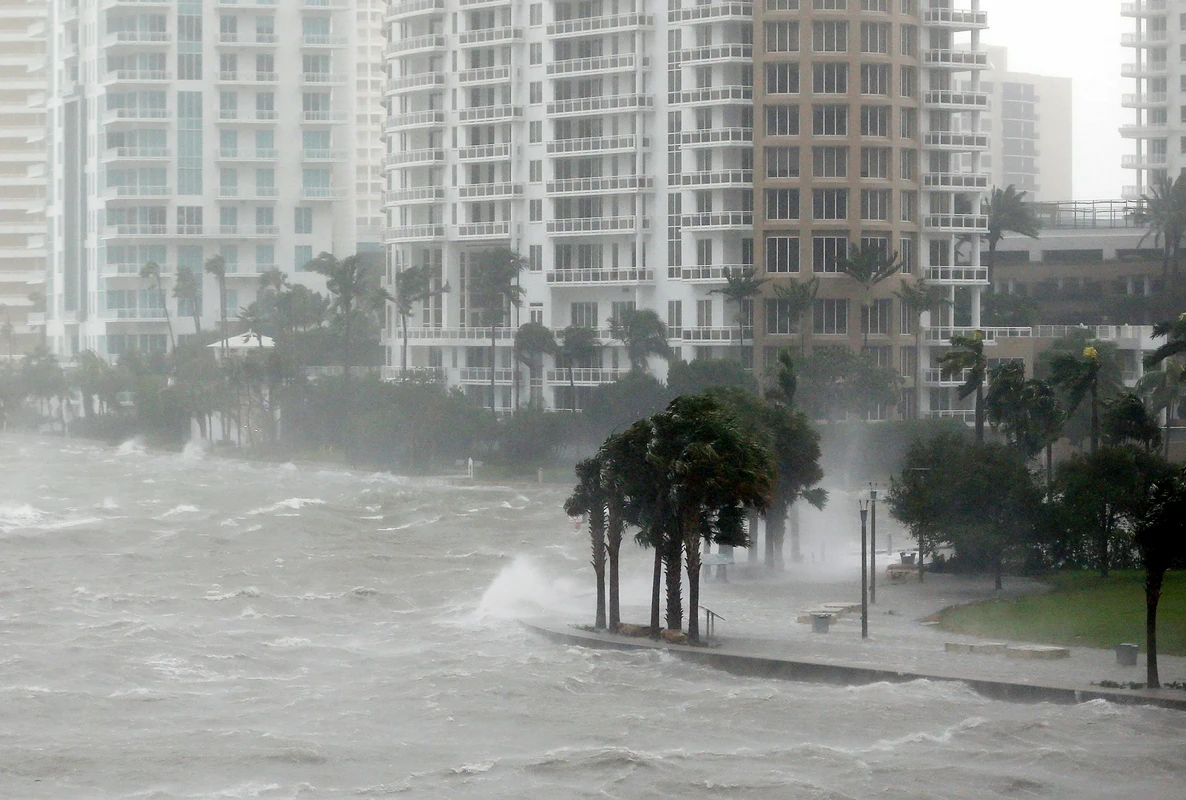
Homes covered by Florida's 2001 building code were 22% less likely to show signs of wind damage after Hurricane Irma than comparable homes built just before the rules took effect, a study found.

hurricane
Credit: open sources

Researchers David Wolf and Kenji Takeuchi used post-storm aerial photographs to identify homes covered with blue tarps after Hurricane Irma struck Florida in September 2017. The tarps, commonly used to cover damaged roofs, served as a visible indicator of wind damage.

The researchers then compared properties built shortly before and after the 2001 Florida Building Code took effect. This approach was designed to isolate the effect of the stricter code from other differences between homes.

The analysis covered more than 500,000 homeowners. Properties subject to the newer code were 22% less likely to show wind damage. Among damaged properties, the measured severity of damage was 27% lower.

The study also examined property sales after the hurricane. Damaged homes sold before repairs were completed were less likely to sell and fetched 13.3% less on average than undamaged homes. That difference was about $29,400.

The findings provide evidence that stronger construction standards can reduce hurricane wind risk. However, the study used blue tarps as a proxy for damage and focused on homes affected by one hurricane in Florida, so the estimates should not automatically be applied to every storm or location.

The paper was published in the August 2026 issue of the American Economic Journal: Economic Policy.

Source: phys.org

Share this article

Rate this article

World News

Trump orders military strikes on Venezuela; Maduro declares state of emergency

News Desk January 3, 2026 11:10 AM 2 min read

CARACAS, Venezuela — President Trump ordered strikes on sites inside Venezuela, including military facilities, U.S. officials told CBS News early Saturday, in a major escalation of the administration's campaign against Venezuelan President Nicolás Maduro.

Trump orders military strikes on Venezuela; Maduro declares state of emergency

At least seven explosions and low-flying aircraft were heard around 2 a.m. local time in Caracas. The southern area of the capital, near a major military base, was left without electricity.

Venezuelan Foreign Minister Yván Gil announced that President Maduro has signed a decree declaring a state of emergency and ordered all national defense plans to be implemented. The ministry said Venezuela "has been subjected to military aggression by the United States" and condemned attacks on civilian and military installations.

"The purpose of this attack is to seize Venezuela's strategic resources, in particular its oil and minerals," the Foreign Ministry said in a statement. "They will not be able to achieve this."

Colombian President Gustavo Petro called for an emergency meeting of the United Nations and the Organization of American States. "Caracas is under attack right now. Warn the whole world: Venezuela is under attack. They are bombing with missiles," Petro wrote on social media.

According to CBS News, Trump gave the military the green light to conduct land strikes days before the operation. Military officials had considered launching the mission on Christmas Day, but airstrikes in Nigeria against ISIS targets took precedence.

The Pentagon referred all requests for comment to the White House.

The strikes follow months of U.S. military buildup in the region, with approximately 15,000 troops and 11 naval vessels, including the USS Gerald R. Ford aircraft carrier, positioned in the Caribbean.

Share this article

Rate this article

World News

Explosions, low-flying aircraft reported in Venezuela's Caracas

News Desk January 3, 2026 10:22 AM 2 min read

CARACAS, Venezuela — At least seven explosions and low-flying aircraft were heard around 2 a.m. local time Saturday in Venezuela's capital, Caracas, according to witnesses and news agencies.

Explosions, low-flying aircraft reported in Venezuela's Caracas

It was not immediately clear what was behind the explosions. Venezuela's government, the Pentagon and White House did not immediately respond to requests for comment.

People in various neighborhoods rushed to the streets. The southern area of the city, near a major military base, was without electricity.

A CNN team witnessed several explosions, with the first blast recorded at approximately 1:50 a.m. local time. Some areas of the city were without power, and journalists in the Venezuelan capital could hear sounds of aircraft after the explosions.

This comes as the U.S. military has been targeting, in recent days, alleged drug-smuggling boats. Trump on Monday said the United States hit and destroyed a docking area for alleged Venezuelan drug boats. The Republican leader would not say if it was a military or CIA operation or where the strike occurred.

On Friday, Venezuela said it was open to negotiating an agreement with the United States to combat drug trafficking. President Nicolás Maduro also said in a pretaped interview aired Thursday that the U.S. wants to force a government change in Venezuela and gain access to its vast oil reserves through the monthslong pressure campaign that began with a massive military deployment to the Caribbean Sea in August.

Share this article

Rate this article

Animals & Nature

Victoria plans H5 bird flu vaccination for more than 5,000 little penguins

News Desk August 20, 2026 12:11 PM 2 min read

Wildlife teams in Victoria expect to vaccinate more than 5,000 little penguins at Phillip Island and St Kilda as part of an effort to reduce the impact of H5 bird flu.

penguins
Credit: pexels.com

The Victorian government announced the program on August 12 after vaccine doses arrived at Phillip Island. The rollout was due to begin once final regulatory approvals were in place.

Each selected penguin must be caught and identified, vaccinated, then caught again for a second dose. Little penguins return regularly to the same colonies and often to the same burrows, making this unusually large wild-bird vaccination effort possible.

Phillip Island Nature Parks said the project was believed to be the world's largest vaccination program involving wild birds. That description is the organiser's assessment, rather than a formally verified world record.

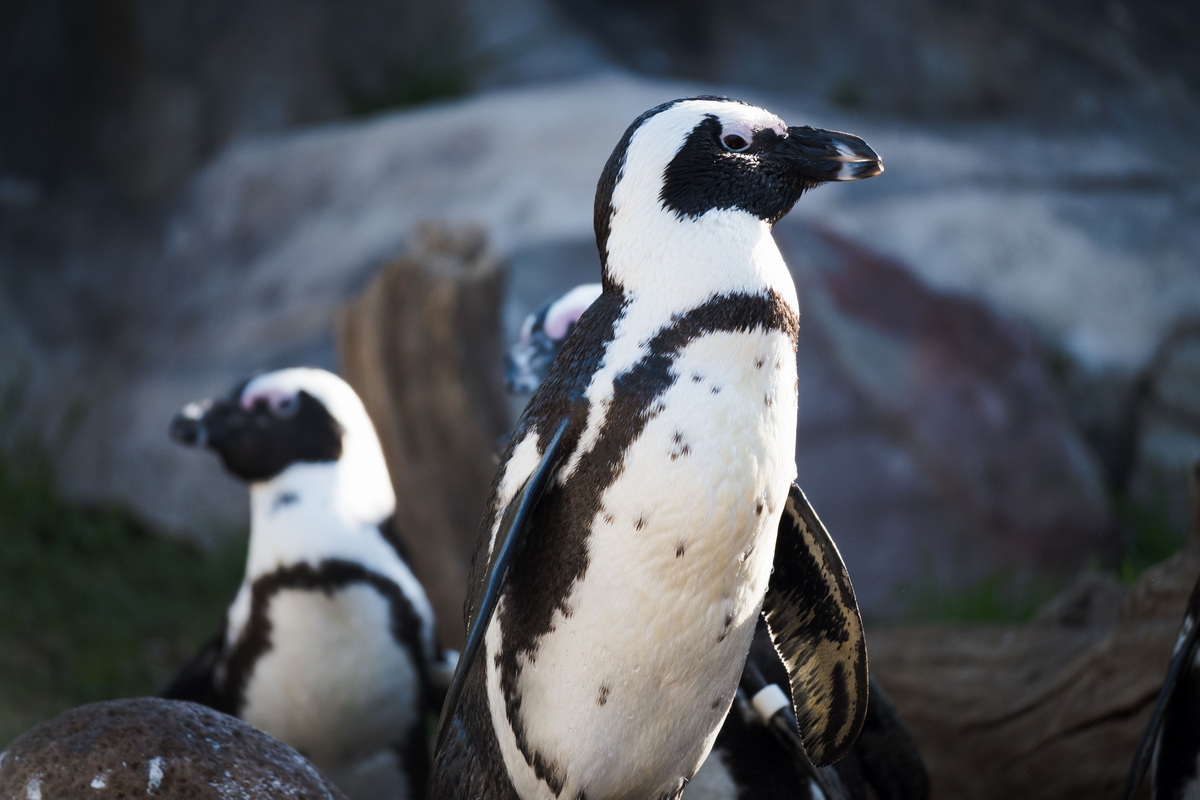
The Phillip Island colony contains about 40,000 little penguins. Their dense colonies could allow infection to spread quickly. The species is the world's smallest penguin, typically standing about 30 centimetres tall and weighing around 1.5 kilograms.

When the vaccination program was announced, the Victorian government said H5 bird flu had been detected in wild birds at several locations, including Phillip Island, but not yet in a little penguin. Subsequent reporting said a little penguin from Phillip Island had died with the virus before vaccinations began.

Vaccination cannot stop H5 bird flu from circulating among wild birds, and it will not protect every penguin. Authorities say it may reduce severe disease and deaths when used alongside surveillance, biosecurity and wildlife-response measures.

The vaccine contains inactivated virus and cannot cause bird flu. It stimulates an immune response, but protection is not guaranteed. The two-dose schedule is intended to strengthen that response. Individual birds must be monitored for adverse effects after vaccination.

Australia has also prepared vaccination programs for other priority native birds, particularly threatened species in zoos or closely managed populations. National authorities say H5 bird flu cannot feasibly be eradicated from wildlife following detections and evidence of local transmission, so the response focuses on monitoring and reducing harm.

The Australian government says the current risk to people remains low and that no H5 detections have been found in poultry or agricultural production. Members of the public should not touch sick or dead birds. Suspected cases can be reported to the Emergency Animal Disease Hotline on 1800 675 888.

Source: theconversation.com

Share this article

Rate this article

Science & Tech

Heart Aerospace’s X1 Completes First 27-Minute Electric Flight

News Desk August 18, 2026 02:34 PM 3 min read

Heart Aerospace’s full-scale X1 demonstrator completed its first flight in upstate New York on August 12, 2026. The battery-powered aircraft stayed aloft for 27 minutes, but it remains an experimental test aircraft rather than a passenger plane ready for service.

Electric Airplane
Credit: Heart Aerospace

The X1 took off from Plattsburgh International Airport and climbed to about 1,100 feet. Heart Aerospace said its four electric motors delivered more than one megawatt of power during the flight. The aircraft has a wingspan of 106 feet and weighed more than 25,000 pounds at takeoff.

According to the company, the batteries supplied about $5 worth of electricity during the flight. That figure covers energy alone. It does not include the much larger costs of developing, buying and operating an aircraft, such as maintenance, crew, airport fees, battery replacement and financing.

Heart describes the X1 as the largest fully electric aircraft yet flown. The claim refers to the aircraft’s overall scale, but there is no single universally used measure of aircraft size. The X1 is comparable in dimensions to a small regional airliner, although it was built as a technology demonstrator and did not carry passengers.

The aircraft flew under an experimental airworthiness certificate issued by the US Federal Aviation Administration. Its first flight was conducted within a restricted test envelope and included takeoff, a low-altitude climb, basic maneuvers and landing. A successful first flight does not demonstrate the range, reliability or regulatory compliance needed for commercial passenger service.

The X1 is helping Heart develop the ES-30, a proposed 30-seat hybrid-electric regional aircraft. Heart currently lists a planned all-electric range of 125 miles and a hybrid range of up to 500 miles. The company is targeting type certification in 2031. Those figures and the schedule are development goals, not demonstrated performance or regulatory approvals.

Battery weight remains one of the main barriers to fully electric airliners. Batteries store much less energy per unit of weight than jet fuel and do not become lighter as their charge is used. Heart therefore plans to combine electric propulsion with fuel-powered turboprop engines on the ES-30 for flights beyond its intended battery-only range.

The company says the ES-30 could reduce aircraft operating costs by more than 40% when it enters service. That estimate has not yet been demonstrated in commercial operations and depends on the final aircraft, energy prices, maintenance needs and certification requirements.

The X1 flight is an important engineering milestone for Heart, but it does not show that a battery-electric regional airliner is ready for airline service. Further flight testing and development will be needed before the company’s commercial plans can be assessed.

Source: www.zmescience.com

Share this article

Rate this article

Belarus

Lukashenko Opens Polesia Festival, Calls Region Ancestral Home of Slavs

News Desk August 18, 2026 02:19 PM 3 min read

Belarusian President Alexander Lukashenko attended the opening of the Zov Polesia festival, hailing the Polesia region as the ancestral home of the Slavs and the source of Belarusian identity. He also highlighted efforts to develop the region and preserve its heritage.

Polesia Festival
Photo: president.gov.by

Belarusian President Alexander Lukashenko took part on 15 August in the opening ceremony of the international festival of ethnocultural traditions "Zov Polesia" ("Call of Polesia"), an event dedicated to the cultural traditions of the Polesia region, a historical area in southern Belarus.

Greeting participants, Lukashenko called the festival a bright and unique event. "According to historians, Polesia is the ancestral home of the Slavs," he said. "From here come our roots." He recalled that the festival was launched in 2010 as a reason for the three "brotherly peoples" — Belarusians, Russians and Ukrainians — to come together, and said all Slavs were welcome.

Origins and Identity

The president said the roots of the Belarusian people reach back to Turov, a town in the region, and that no politics could reverse that history. He said he had come to believe that the main features of the Belarusian character were formed in Polesia. "Poleshuks are cunning, smart, very hardworking and talented people," he said, using the traditional name for residents of the area.

Lukashenko said Belarusians are a nation that absorbed habits and traditions from Israel, the East, Europe and Kyivan Rus', and ordered that this be reflected in the National Museum now under construction in the centre of Minsk. "Culture Minister Markov is finishing the construction of the National Museum, and we must firmly underline this and define it forever," he said.

Festival and Peace

He praised the people of the region, saying that every visit to Pripyat Polesia fills him with admiration. He said the festival had become a calling card of the region and a holiday for friends and like-minded people.

"We are open and always glad to see guests, we remember our roots and are faithful to traditions," Lukashenko said, adding that the region's most important issue was peace and security. "War is very close. It is at your doorstep," he said.

Development and Recollections

The president recalled his first steps in office in Polesia, including mowing the Pripyat floodplain together with locals, after which they called him "one of us." He also described an early meeting in Lyaskovichi, an agro-town in the region, when an elderly woman asked him for help with bread. He said he ordered military bakeries to be moved there, and the first hot bread was produced.

Lukashenko said a previous revival program had been implemented and that a new development program for Polesia is now being funded with significant budget resources. He said the emphasis would be on roads and bridges and on concentrating development in agro-towns such as Lyaskovichi, where living conditions should be as good as in cities. "From you only one thing is needed — discipline, order and labour," he told residents.

The program is overseen by Mikhail Rusy, a native of Polesia, the president noted. He said the region has become a center of developed industry, vegetable growing and a cultural center with tourist potential.

Source: pravo.by

Share this article

Rate this article

Science & Tech

New Underwater Adhesive Bonds in 10 Seconds and Remains Stable for Years in Tests

News Desk August 11, 2026 10:18 PM 2 min read

Researchers have developed a reusable underwater adhesive that can form a strong bond within seconds and remain stable during prolonged immersion. In laboratory tests, the material reached an adhesive strength of about 1.1 MPa after 10 seconds and a bonded sample supported a 2 kg load for more than three years underwater.

Commercial diver applying adhesive to an underwater pipeline during a repair
Фото: Underwater pipeline repair. AI-generated illustrative image

Adhesives are widely used in manufacturing and construction, but bonding surfaces underwater remains particularly difficult. Water forms a hydration layer on submerged materials that can prevent adhesives from making close contact with a surface and can weaken bonds over time.

Researchers have now developed a supramolecular underwater adhesive designed to overcome this problem. The material, described in a study published in Nature Communications, relies on a process known as solvent-exchange-mediated self-assembly.

The researchers created a supramolecular ionic liquid known as BP16TPB and dissolved it in dimethyl sulfoxide, or DMSO. When the mixture comes into contact with water, solvent exchange triggers a rapid rearrangement of its molecular components.

This causes the initially flowable material to assemble into a dense, water-resistant network capable of adhering to submerged surfaces.

According to the researchers, the process involves several molecular interactions, including hydrogen bonding, π–π stacking and electrostatic interactions. It is also assisted by the Marangoni effect, in which differences in surface tension drive fluid movement.

Together with the hydrophobic nature of the adhesive, this flow helps overcome the thin layer of water that normally prevents close contact between an adhesive and a submerged surface.

In laboratory experiments, the material bonded to surfaces including ceramic, epoxy and plastic. It reached an underwater adhesive strength of approximately 1.1 MPa after only 10 seconds of curing.

The researchers also tested the long-term durability of the bond. In one experiment, a bonded sample supported a 2 kg load during more than three years of continuous underwater immersion, indicating strong resistance to long-term degradation and deformation under a constant load.

The adhesive also showed some ability to be reused. During laboratory cycling tests, it could be detached and reattached underwater while retaining adhesive performance over eight cycles.

The researchers report that the material also remained functional in acidic, alkaline and saline solutions. However, its performance declined at temperatures above approximately 70°C (158°F) .

The findings could contribute to the development of new adhesives for underwater maintenance and other applications where conventional glues perform poorly. Potential uses could include marine infrastructure and other systems that require durable bonding in wet environments.

The researchers also suggest that the underlying self-assembly strategy could help guide the development of other environmentally responsive materials whose properties change when exposed to different surroundings.

Source: sciencealert.com

Share this article

Rate this article

Animals & Nature

Selective breeding may threaten valuable genetic diversity in cattle

News Desk August 11, 2026 10:07 PM 3 min read

Traditional cattle populations may preserve genetic variants that have become rare or disappeared from modern high-performing herds, potentially providing valuable resources for future breeding and adaptation, according to researchers at Aberystwyth University.

Hereford cattle
Photo: Eric Garcia / Pexels

Researchers at Aberystwyth University have reviewed genetic studies comparing traditional and modern cattle populations and found evidence that decades of selective breeding for productivity may have narrowed the genetic base of some modern breeds.

The review, published in Applied Animal Science, examines differences between traditional and modern populations within cattle breeds and highlights gaps in current knowledge about the genetic diversity that may still survive in ancestral or less intensively selected herds.

Traditional cattle populations can retain genetic variants that are absent or less common in their modern counterparts. According to the researchers, some of this diversity could prove useful for resilience, adaptation to changing environmental conditions and future breeding programs.

The review highlights traditional populations of breeds including Ayrshire, Jersey and Hereford. Genetic studies suggest that some of these populations remain distinct from modern, intensively selected populations of the same breeds.

Traditional herds are often relatively small and have generally been subjected to less intensive selection. Some have also developed in close association with particular local environments, potentially preserving genetic characteristics that have been reduced elsewhere.

“Traditional cattle populations are more than just historical relics—they are living genetic libraries that hold answers to some of the most pressing challenges facing agriculture today,” researcher Kardelen Oya Temiz said.

She noted that modern breeding has understandably focused on improving productivity but that this process has often come at the cost of genetic diversity.

Dr. Matthew Hegarty, senior lecturer in the Department of Life Sciences at Aberystwyth University, said modern agriculture had achieved major gains in efficiency and production while also narrowing the genetic base of many breeds. According to Hegarty, reduced diversity could make cattle populations more vulnerable to disease, environmental stress and changing conditions.

However, the researchers stress that relatively little is known about genetic differences between traditional and modern populations within many cattle breeds.

They therefore call for further genomic studies of breeds in which traditional or ancestral populations still survive. Such research could help identify genetic variants preserved in these populations and determine whether they could be valuable for future breeding programs.

The authors argue that conserving traditional cattle populations has practical as well as cultural importance. As farming conditions change, genetic diversity preserved in these animals could provide breeders with additional options for developing cattle better suited to future environmental and agricultural challenges.

Sources: Aberystwyth University, Temiz, K. O., Aubrey, W., & Hegarty, M. Differences between traditional and modern populations within cattle breeds: What do we not know? Applied Animal Science, 41(6), 597–608, Aberystwyth University Research Portal, Phys.org

Share this article

Rate this article