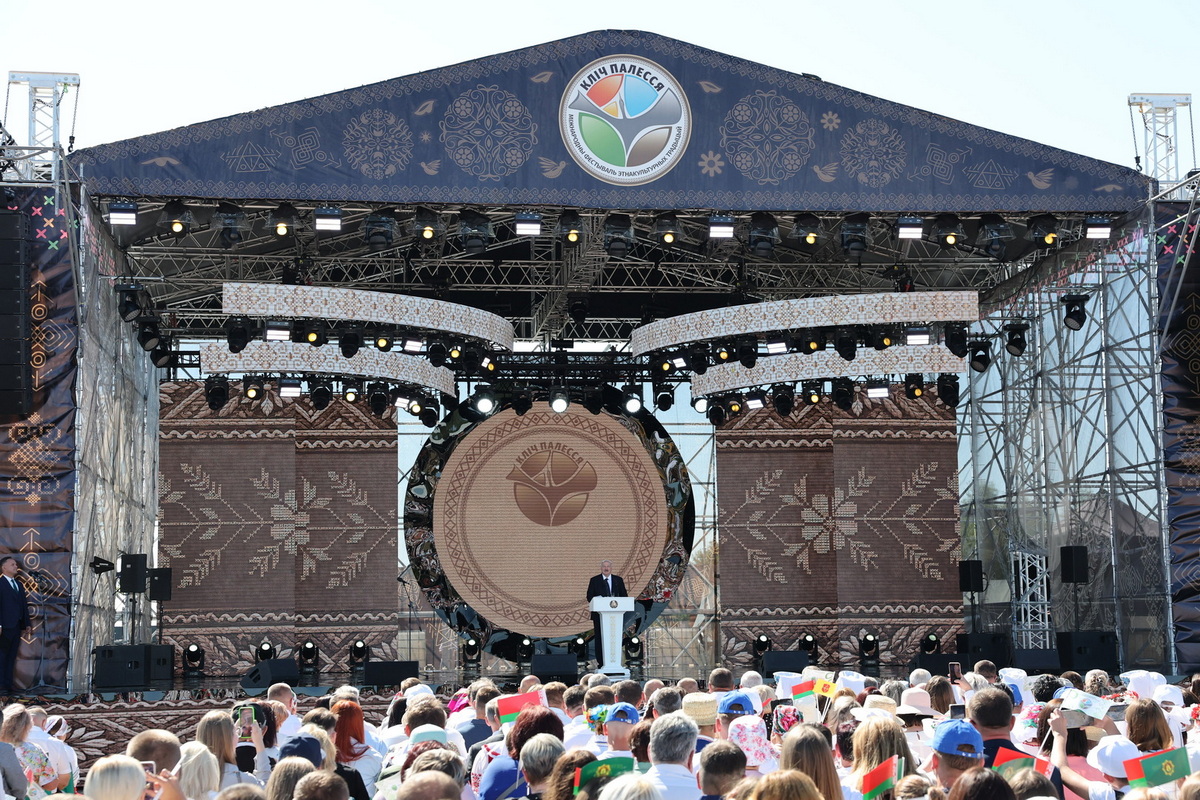
Belarusian President Alexander Lukashenko took part on 15 August in the opening ceremony of the international festival of ethnocultural traditions "Zov Polesia" ("Call of Polesia"), an event dedicated to the cultural traditions of the Polesia region, a historical area in southern Belarus.
Greeting participants, Lukashenko called the festival a bright and unique event. "According to historians, Polesia is the ancestral home of the Slavs," he said. "From here come our roots." He recalled that the festival was launched in 2010 as a reason for the three "brotherly peoples" — Belarusians, Russians and Ukrainians — to come together, and said all Slavs were welcome.
Origins and Identity
The president said the roots of the Belarusian people reach back to Turov, a town in the region, and that no politics could reverse that history. He said he had come to believe that the main features of the Belarusian character were formed in Polesia. "Poleshuks are cunning, smart, very hardworking and talented people," he said, using the traditional name for residents of the area.
Lukashenko said Belarusians are a nation that absorbed habits and traditions from Israel, the East, Europe and Kyivan Rus', and ordered that this be reflected in the National Museum now under construction in the centre of Minsk. "Culture Minister Markov is finishing the construction of the National Museum, and we must firmly underline this and define it forever," he said.
Festival and Peace
He praised the people of the region, saying that every visit to Pripyat Polesia fills him with admiration. He said the festival had become a calling card of the region and a holiday for friends and like-minded people.
"We are open and always glad to see guests, we remember our roots and are faithful to traditions," Lukashenko said, adding that the region's most important issue was peace and security. "War is very close. It is at your doorstep," he said.
Development and Recollections
The president recalled his first steps in office in Polesia, including mowing the Pripyat floodplain together with locals, after which they called him "one of us." He also described an early meeting in Lyaskovichi, an agro-town in the region, when an elderly woman asked him for help with bread. He said he ordered military bakeries to be moved there, and the first hot bread was produced.
Lukashenko said a previous revival program had been implemented and that a new development program for Polesia is now being funded with significant budget resources. He said the emphasis would be on roads and bridges and on concentrating development in agro-towns such as Lyaskovichi, where living conditions should be as good as in cities. "From you only one thing is needed — discipline, order and labour," he told residents.
The program is overseen by Mikhail Rusy, a native of Polesia, the president noted. He said the region has become a center of developed industry, vegetable growing and a cultural center with tourist potential.
Source: pravo.by