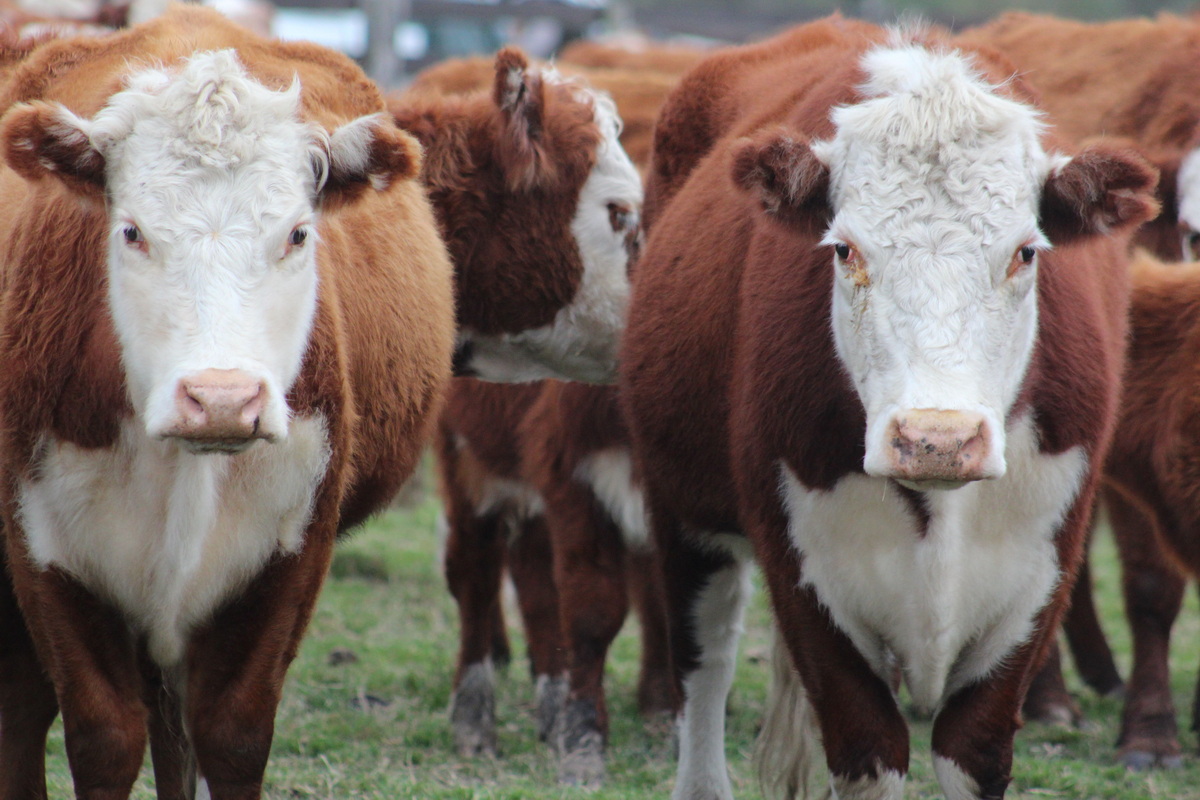
Traditional cattle populations may preserve genetic variants that have become rare or disappeared from modern high-performing herds, potentially providing valuable resources for future breeding and adaptation, according to researchers at Aberystwyth University.
Photo: Eric Garcia / Pexels
Researchers at Aberystwyth University have reviewed genetic studies comparing traditional and modern cattle populations and found evidence that decades of selective breeding for productivity may have narrowed the genetic base of some modern breeds.
The review, published in Applied Animal Science, examines differences between traditional and modern populations within cattle breeds and highlights gaps in current knowledge about the genetic diversity that may still survive in ancestral or less intensively selected herds.
Traditional cattle populations can retain genetic variants that are absent or less common in their modern counterparts. According to the researchers, some of this diversity could prove useful for resilience, adaptation to changing environmental conditions and future breeding programs.
The review highlights traditional populations of breeds including Ayrshire, Jersey and Hereford. Genetic studies suggest that some of these populations remain distinct from modern, intensively selected populations of the same breeds.
Traditional herds are often relatively small and have generally been subjected to less intensive selection. Some have also developed in close association with particular local environments, potentially preserving genetic characteristics that have been reduced elsewhere.
“Traditional cattle populations are more than just historical relics—they are living genetic libraries that hold answers to some of the most pressing challenges facing agriculture today,” researcher Kardelen Oya Temiz said.
She noted that modern breeding has understandably focused on improving productivity but that this process has often come at the cost of genetic diversity.
Dr. Matthew Hegarty, senior lecturer in the Department of Life Sciences at Aberystwyth University, said modern agriculture had achieved major gains in efficiency and production while also narrowing the genetic base of many breeds. According to Hegarty, reduced diversity could make cattle populations more vulnerable to disease, environmental stress and changing conditions.
However, the researchers stress that relatively little is known about genetic differences between traditional and modern populations within many cattle breeds.
They therefore call for further genomic studies of breeds in which traditional or ancestral populations still survive. Such research could help identify genetic variants preserved in these populations and determine whether they could be valuable for future breeding programs.
The authors argue that conserving traditional cattle populations has practical as well as cultural importance. As farming conditions change, genetic diversity preserved in these animals could provide breeders with additional options for developing cattle better suited to future environmental and agricultural challenges.
Researchers at Aberystwyth University have reviewed genetic studies comparing traditional and modern cattle populations and found evidence that decades of selective breeding for productivity may have narrowed the genetic base of some modern breeds.
The review, published in Applied Animal Science, examines differences between traditional and modern populations within cattle breeds and highlights gaps in current knowledge about the genetic diversity that may still survive in ancestral or less intensively selected herds.
Traditional cattle populations can retain genetic variants that are absent or less common in their modern counterparts. According to the researchers, some of this diversity could prove useful for resilience, adaptation to changing environmental conditions and future breeding programs.
The review highlights traditional populations of breeds including Ayrshire, Jersey and Hereford. Genetic studies suggest that some of these populations remain distinct from modern, intensively selected populations of the same breeds.
Traditional herds are often relatively small and have generally been subjected to less intensive selection. Some have also developed in close association with particular local environments, potentially preserving genetic characteristics that have been reduced elsewhere.
“Traditional cattle populations are more than just historical relics—they are living genetic libraries that hold answers to some of the most pressing challenges facing agriculture today,” researcher Kardelen Oya Temiz said.
She noted that modern breeding has understandably focused on improving productivity but that this process has often come at the cost of genetic diversity.
Dr. Matthew Hegarty, senior lecturer in the Department of Life Sciences at Aberystwyth University, said modern agriculture had achieved major gains in efficiency and production while also narrowing the genetic base of many breeds. According to Hegarty, reduced diversity could make cattle populations more vulnerable to disease, environmental stress and changing conditions.
However, the researchers stress that relatively little is known about genetic differences between traditional and modern populations within many cattle breeds.
They therefore call for further genomic studies of breeds in which traditional or ancestral populations still survive. Such research could help identify genetic variants preserved in these populations and determine whether they could be valuable for future breeding programs.
The authors argue that conserving traditional cattle populations has practical as well as cultural importance. As farming conditions change, genetic diversity preserved in these animals could provide breeders with additional options for developing cattle better suited to future environmental and agricultural challenges.
Researchers have developed a reusable underwater adhesive that can form a strong bond within seconds and remain stable during prolonged immersion. In laboratory tests, the material reached an adhesive strength of about 1.1 MPa after 10 seconds and a bonded sample supported a 2 kg load for more than three years underwater.
Adhesives are widely used in manufacturing and construction, but bonding surfaces underwater remains particularly difficult. Water forms a hydration layer on submerged materials that can prevent adhesives from making close contact with a surface and can weaken bonds over time.
Researchers have now developed a supramolecular underwater adhesive designed to overcome this problem. The material, described in a study published in Nature Communications, relies on a process known as solvent-exchange-mediated self-assembly.
The researchers created a supramolecular ionic liquid known as BP16TPB and dissolved it in dimethyl sulfoxide, or DMSO. When the mixture comes into contact with water, solvent exchange triggers a rapid rearrangement of its molecular components.
This causes the initially flowable material to assemble into a dense, water-resistant network capable of adhering to submerged surfaces.
According to the researchers, the process involves several molecular interactions, including hydrogen bonding, π–π stacking and electrostatic interactions. It is also assisted by the Marangoni effect, in which differences in surface tension drive fluid movement.
Together with the hydrophobic nature of the adhesive, this flow helps overcome the thin layer of water that normally prevents close contact between an adhesive and a submerged surface.
In laboratory experiments, the material bonded to surfaces including ceramic, epoxy and plastic. It reached an underwater adhesive strength of approximately 1.1 MPa after only 10 seconds of curing.
The researchers also tested the long-term durability of the bond. In one experiment, a bonded sample supported a 2 kg load during more than three years of continuous underwater immersion, indicating strong resistance to long-term degradation and deformation under a constant load.
The adhesive also showed some ability to be reused. During laboratory cycling tests, it could be detached and reattached underwater while retaining adhesive performance over eight cycles.
The researchers report that the material also remained functional in acidic, alkaline and saline solutions. However, its performance declined at temperatures above approximately 70°C (158°F).
The findings could contribute to the development of new adhesives for underwater maintenance and other applications where conventional glues perform poorly. Potential uses could include marine infrastructure and other systems that require durable bonding in wet environments.
The researchers also suggest that the underlying self-assembly strategy could help guide the development of other environmentally responsive materials whose properties change when exposed to different surroundings.
A prisoner exchange operation between Belarus and Poland was held on April 28 at the state border in the Kamenets District. The swap was conducted under a "five-for-five" formula, the Belarusian state news agency BelTA reports.
Source: Belarusian state news agency BelTA
Among those released is journalist Andrei Pochobut. Taking into account a personal appeal addressed to the President of Belarus by Pochobut's mother and Anzhelika Borys, the head of state instructed the State Security Committee (KGB) to include the convicted man in the exchange process.
As a result of the operation, ten citizens of different countries were released and given the opportunity to reunite with their families. Among them are also citizens of Belarus who performed especially important tasks in the interests of the country's national security and defense capability.
According to the agency, the exchange marked the culmination of a complex and lengthy negotiation process between the KGB of Belarus and Poland's Foreign Intelligence Agency. The talks began in September 2025 and were conducted on the direct instructions of Alexander Lukashenko. Special services of seven states ultimately took part in the process.
We live in an age when humanity prides itself on scientific achievements—we've decoded the genome, created artificial intelligence, and ventured into space.
Image: AI-generated
Yet paradoxically, the more we learn about nature, the clearer it becomes: we cannot replicate even its simplest creations. What if Earth's entire biosphere is not the result of random processes, but the product of technologies we have yet to comprehend?
Engineering Marvels We Cannot Replicate
Image: pixabay.com
Consider the flight of an ordinary housefly. This tiny creature beats its wings approximately 200 times per second, instantly changes direction, hovers in mid-air, and lands upside down on ceilings. The entire flight control system fits inside a brain the size of a poppy seed—roughly 100,000 neurons coordinating these incredibly complex maneuvers. Modern drones look like clumsy toys by comparison: noisy, energy-hungry, and requiring sophisticated processors just for basic stabilization.
Image: AI-generated
Or take dolphin echolocation. These animals "see" with sound so precisely they can distinguish the internal structure of objects. A dolphin can determine what metal an object is made of, whether it's hollow or solid, and even "see" fish in murky water from hundreds of meters away. The most advanced sonar systems on our submarines, occupying entire rooms, cannot match this precision.
Image: AI-generated
Molecular Machines: Nanotechnology We Can Only Dream Of
Inside every living cell operate molecular machines that look like illustrations from a futuristic nanorobotics textbook. ATP synthase is literally a molecular motor spinning at 8,000 revolutions per minute, producing ATP energy molecules. Ribosomes read genetic code and assemble proteins with single-amino-acid precision, performing millions of operations without a single error.
Image: AI-generated
The DNA replication system copies three billion "letters" of genetic code so accurately that an error occurs only once per billion operations. That's like hand-copying a thousand thick books and making just one typo. All of this happens in spaces measured in nanometers, at body temperature, in an aqueous environment.
A Universe of Fine-Tuned Coincidences
The conditions for life on Earth are so precisely calibrated that the slightest deviation would spell catastrophe. Change the distance from the Sun by just 5%, and water would either boil away or freeze. The Moon is exactly the right size and distance to perfectly stabilize Earth's rotation, creating a stable climate.
Illustrative image
Jupiter sits precisely where its gravity works as a "cosmic vacuum cleaner," attracting asteroids and comets that could otherwise destroy life on Earth. Our planet's magnetic field has just the right strength to protect against radiation without interfering with biological processes.
Nature's Impossible Innovations
Some of nature's solutions are so counterintuitive that it's difficult to imagine them arising by chance. Giraffes, for example, have a unique valve system in their necks that prevents them from losing consciousness when they suddenly lower their heads five meters to drink. Without this system, the animal would die from brain hemorrhage the first time it tried to take a sip. But how could evolution "know" about this problem in advance?
Image: pixabay.com
Electric eels generate discharges of up to 600 volts without electrocuting themselves. Their bodies are living power plants with insulation, capacitors, and directed discharge systems. Try to imagine the step-by-step random development of such a system—at intermediate stages, the animal would simply kill itself with its own electricity.
Illustrative image
It's remarkable how everything in nature is interconnected, as if someone carefully calibrated each element of the system. Bees cannot exist without flowers, but most plants would perish without pollinators. Trees exchange nutrients through fungal networks, warning each other of danger—an entire forest functions as a single organism. Predators regulate herbivore populations, herbivores control vegetation, plants form soil, soil filters water. Remove one element, and the entire chain collapses. Even death is built into the system: decomposition feeds new life. Every creature, from bacteria to whales, occupies its place in this incredibly precise arrangement where everything works in perfect balance. The whole system appears absolutely logical and deliberate, as if a higher intelligence methodically constructed every connection, foreseeing all consequences—too perfect for chance.
Image: pixabay.com
Where Are the New Species?
An important observation often overlooked: in all of recorded human history, we have never documented the emergence of a fundamentally new species of animal or plant "from scratch." We see adaptations, variations within species, changes in coloration or size—but not the emergence of new organs, systems, or types of organisms. Even in laboratories, where scientists conduct experiments with thousands of generations of bacteria in accelerated conditions, the results are merely modifications of existing traits, not the appearance of something fundamentally new. Nature seems to work with a ready-made "construction kit," combining and adjusting existing elements but not creating new ones from scratch.
Image: pixabay.com
The Brain: Pinnacle of Unknown Technologies
The human brain contains 86 billion neurons with quadrillions of connections between them. It consumes just 20 watts of energy—less than an ordinary light bulb. Yet the brain is capable of things no supercomputer can do: self-awareness, creativity, feeling, dreaming.
Image: pixabay.com
Every memory, every thought is not simply an electrical signal but a complex pattern of activity across millions of neurons. The brain constantly rewires its connections, learns, adapts—with no programmer, no updates, no reboot required.
A World Made for Us?
Remarkably, all this incredible complexity of nature seems designed specifically for human perception. We are the only ones who can appreciate the beauty of a sunset, the symmetry of a flower, the majesty of mountains. Fruits ripen in bright colors that attract our eyes; their sweetness perfectly matches our taste receptors. Birdsong falls precisely within the frequency range pleasant to the human ear. The fragrance of flowers, the sound of the sea, the softness of grass—all bring us pleasure, though none of this is strictly necessary for survival. Even mathematical proportions in nature—the golden ratio, fractals, spirals—resonate with our sense of beauty. It's as if the entire planet were a gift created so that humans could not merely exist, but enjoy every manifestation of life, learn, marvel, and create. We are not just part of the ecosystem—we are the only ones capable of recognizing and appreciating the full grandeur of creation.
Image: pixabay.com
Hidden Architects?
If we accept the hypothesis that life on Earth is the product of an advanced civilization, many things fall into place: the incredible complexity and interconnectedness of all systems; the absence of intermediate forms for many species in the fossil record; and the fact that the first organisms appeared as soon as Earth became habitable, as if someone had been waiting for precisely that moment to "populate" the planet.
Image: AI-generated
The increasing number of UFO sightings demonstrating technologies that defy known laws of physics could be visits from those who continue to monitor their "project." Perhaps they maintain the system's balance, intervening only when critically necessary.
Connecting the Dots
We can synthesize complex molecules, clone animals, edit genes. But we cannot create a living cell from scratch. We cannot explain how life arose from non-living matter. We don't understand how consciousness emerges from biochemistry.
Perhaps the answer is simple: we are trying to understand technologies that are orders of magnitude beyond our level of development. Like a Stone Age human disassembling a smartphone, we see individual components but don't understand the principles by which everything works.
Why Don't They Make Contact?
We're accustomed to discussing life as the result of random processes and evolution. The very possibility of other intelligent civilizations is often not taken seriously—let alone the idea that they might have played a key role in the origin of life on Earth.
Interestingly, all world religions—despite differences in rituals and traditions—agree on one thing: they affirm the existence of a Higher Power behind the creation of the world. Perhaps this is where science and faith unexpectedly intersect, pointing to the idea that life is "too complex for chance."
Image: AI-generated
The nature around us may not be evolution's blind watchmaker, but a masterpiece of bioengineering created by those for whom atomic-level manipulation of matter is routine. And while we debate the origins of life, its true creators may be watching us from the shadows, following protocols and purposes we cannot fathom.
This article presents an alternative perspective on the origins of life. Mainstream science explains the development of living organisms through evolution, though questions a
CARACAS, Venezuela — President Trump ordered strikes on sites inside Venezuela, including military facilities, U.S. officials told CBS News early Saturday, in a major escalation of the administration's campaign against Venezuelan President Nicolás Maduro.
At least seven explosions and low-flying aircraft were heard around 2 a.m. local time in Caracas. The southern area of the capital, near a major military base, was left without electricity.
Venezuelan Foreign Minister Yván Gil announced that President Maduro has signed a decree declaring a state of emergency and ordered all national defense plans to be implemented. The ministry said Venezuela "has been subjected to military aggression by the United States" and condemned attacks on civilian and military installations.
"The purpose of this attack is to seize Venezuela's strategic resources, in particular its oil and minerals," the Foreign Ministry said in a statement. "They will not be able to achieve this."
Colombian President Gustavo Petro called for an emergency meeting of the United Nations and the Organization of American States. "Caracas is under attack right now. Warn the whole world: Venezuela is under attack. They are bombing with missiles," Petro wrote on social media.
According to CBS News, Trump gave the military the green light to conduct land strikes days before the operation. Military officials had considered launching the mission on Christmas Day, but airstrikes in Nigeria against ISIS targets took precedence.
The Pentagon referred all requests for comment to the White House.
The strikes follow months of U.S. military buildup in the region, with approximately 15,000 troops and 11 naval vessels, including the USS Gerald R. Ford aircraft carrier, positioned in the Caribbean.
CARACAS, Venezuela — At least seven explosions and low-flying aircraft were heard around 2 a.m. local time Saturday in Venezuela's capital, Caracas, according to witnesses and news agencies.
It was not immediately clear what was behind the explosions. Venezuela's government, the Pentagon and White House did not immediately respond to requests for comment.
People in various neighborhoods rushed to the streets. The southern area of the city, near a major military base, was without electricity.
A CNN team witnessed several explosions, with the first blast recorded at approximately 1:50 a.m. local time. Some areas of the city were without power, and journalists in the Venezuelan capital could hear sounds of aircraft after the explosions.
This comes as the U.S. military has been targeting, in recent days, alleged drug-smuggling boats. Trump on Monday said the United States hit and destroyed a docking area for alleged Venezuelan drug boats. The Republican leader would not say if it was a military or CIA operation or where the strike occurred.
On Friday, Venezuela said it was open to negotiating an agreement with the United States to combat drug trafficking. President Nicolás Maduro also said in a pretaped interview aired Thursday that the U.S. wants to force a government change in Venezuela and gain access to its vast oil reserves through the monthslong pressure campaign that began with a massive military deployment to the Caribbean Sea in August.
Share this article
Rate this article
🍪 We use cookies to improve your experience. Learn more